


Product News

XST Launches New Generation 1T/H Reverse Osmosis Equipment to Help SMEs Achieve Efficient Water Purification
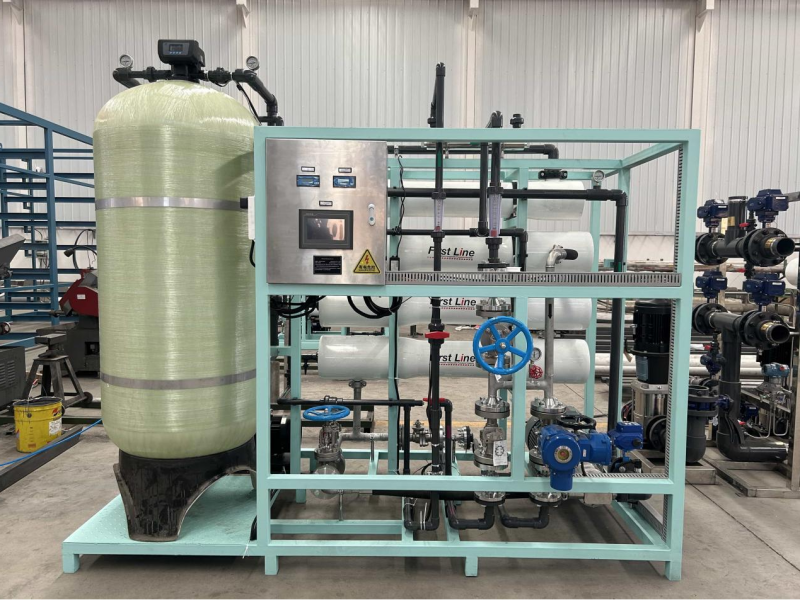
Recently, Xi'an Xinshengtai Water Treatment & Environmental Protection Technology Co., Ltd. officially launched its upgraded 1T/H reverse osmosis (RO) water treatment system to the global market. Designed specifically for small and medium-sized industrial and commercial users, this equipment boasts a water production capacity of 1000 liters per hour and is widely applicable to food and beverage processing, medical and pharmaceutical industries, electronic cleaning, community drinking water systems, and agricultural irrigation.

The Correct Procurement Process for Reverse Osmosis (RO) Equipment, from Small 1-Ton Units to Large-Scale Water Treatment Equipment
When purchasing RO equipment, salespeople will ask how many units you need. Here's a brief overview: The permeate flow rate of RO equipment is determined by the RO membrane. There are three types of RO membranes: 4-foot and 8-inch, typically installed in RO membrane housings.

Why is reverse osmosis (RO) ineffective at removing ammonia nitrogen from water?
Reverse osmosis (RO) technology has a high removal rate for ionic pollutants in water, but its removal effect on ammonia nitrogen is relatively limited. This phenomenon is mainly determined by the following factors:

The Role and Parameters of Terminal Ultrafiltration in Ultrapure Water Systems
Terminal ultrafiltration in ultrapure water is the final, precision membrane barrier installed at the very end of the ultrapure water preparation system, between the storage tank and the point of use. Located after mixed bed, electrodeionization (EDI), or membrane degassing, it directly faces core processes such as wafer cleaning and chemical preparation, bearing the crucial mission of ensuring the physical purity of the final water.
XST Launches New Generation Seawater Desalination System: Lower Energy Consumption, Longer Lifespan
With increasingly scarce freshwater resources, seawater desalination has become the preferred solution for coastal cities, island industries, and deep-sea operations. However, high energy consumption and high operation and maintenance costs deter many companies from "water production." Today, XST officially launches its new generation of seawater desalination reverse osmosis system, boasting three core advantages: lower energy consumption, longer lifespan, and higher stability, truly turning seawater into economically viable freshwater.

Breakthrough Water Treatment Solution: XST Brand Reverse Osmosis System Achieves 99.8% Desalination Rate, Helping Enterprises Reduce Costs and Increase Efficiency
In the fields of industrial water and commercial pure water preparation, unstable water quality, high operating costs, and short membrane lifespan have long plagued many enterprises. Today, XST officially launched its new generation of high-efficiency reverse osmosis (RO) systems, redefining the cost-effectiveness standard of water treatment with three core technological advantages.

Retaining Minerals, Healthier Water Purification | XST's New Generation of Ultrafiltration Water Purifiers Launched
Recently, XST officially launched its new generation of ultrafiltration water purifiers. Addressing industry pain points such as over-filtration, high wastewater rates, expensive consumables, and installation limitations in traditional water purifiers, this new product line features a comprehensive technological upgrade. With core advantages including healthy filtration, energy efficiency, high flow rate, and easy maintenance, it is fully adaptable to various scenarios such as homes, commercial hotels, factory pre-filtration, and rural well water filtration, providing a high-performance, cost-effective water purification solution for all types of users.

A Detailed Guide to 9 Common Water Treatment Methods—Do You Know Them All?
Commonly used water treatment methods include: Sediment Filtration, Water Softening, Activated Carbon Adsorption, Deionization, Reverse Osmosis, Ultrafiltration, Distillation, Ultraviolet (UV) Disinfection, and Biochemical Treatment.

Why does reverse osmosis feedwater still exhibit oxidizing properties after the addition of a reducing agent?
When reverse osmosis feedwater remains oxidative even after the addition of a reducing agent, the common underlying reason is the occurrence of complex catalytic oxidation processes within the water that extend beyond the simple neutralization of residual chlorine.

Why Can't Reverse Osmosis Effectively Remove Ammonia Nitrogen from Water?
While Reverse Osmosis (RO) technology demonstrates high removal rates for ionic contaminants in water, its effectiveness in removing ammonia nitrogen is relatively limited. This phenomenon is primarily determined by the following factors: