


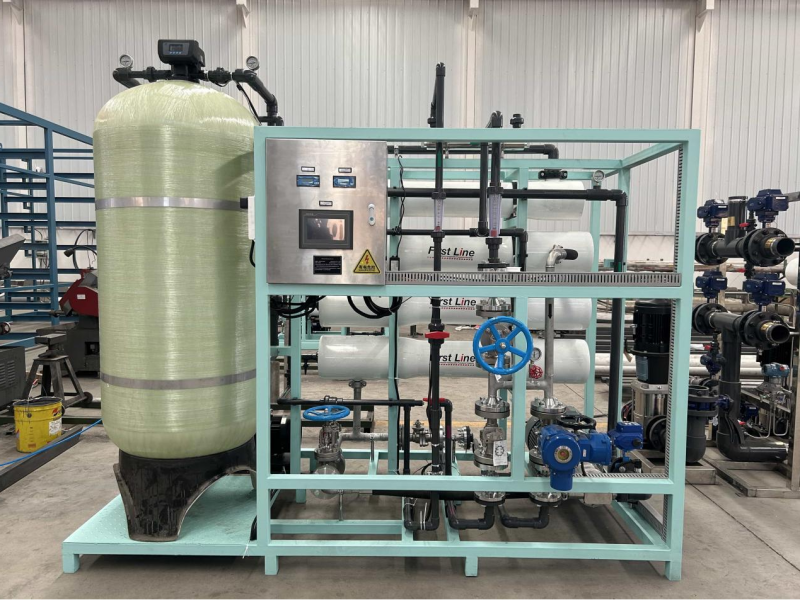

Why Can't Reverse Osmosis Effectively Remove Ammonia Nitrogen from Water?
While Reverse Osmosis (Ro) Technology demonstrates high removal rates for ionic contaminants in water, its effectiveness in removing ammonia nitrogen is relatively limited. This phenomenon is primarily determined by the following factors:
1. The Unique Forms of Ammonia Nitrogen in Water
Ammonia nitrogen does not exist in water as a single, static form; rather, it exists in a dynamic equilibrium between "ammonium ions (NH₄⁺)" and "free ammonia (NH₃)," depending on the pH value.
In typical neutral or slightly acidic water bodies, ammonia nitrogen primarily exists as positively charged ammonium ions; however, as the pH rises (particularly above 8), the proportion of free ammonia increases significantly. The differing physicochemical properties of these two forms directly impact the retention efficiency of the Ro Membrane.
2. Limitations in the Retention Mechanisms of RO Membranes
RO membranes primarily separate substances through two mechanisms: size exclusion (pore sieving) and solution-diffusion:
In practical operation, the surface charge of the membrane may be attenuated due to fouling or pH fluctuations. Furthermore, the hydrated radius of the ammonium ion is relatively small (approximately 0.36 nm)—approaching the pore size threshold of the membrane—making it prone to leakage.
Free ammonia is electrically neutral, possesses an extremely small molecular size (approximately 0.26 nm), and exhibits a certain degree of lipid solubility; consequently, it readily dissolves in and diffuses through the membrane material, leading to a significant reduction in its removal rate. Experimental data indicate that when the pH exceeds 9, the overall removal rate for ammonia nitrogen may drop below 50%.

3. The Critical Influence of Operating Conditions
The pH of the feed water directly determines the distribution of ammonia nitrogen forms. For instance, at a pH of approximately 6, the ammonia nitrogen removal rate can reach 80–90%; however, this rate may plummet when treating alkaline industrial wastewater.
Organic fouling or scaling can alter the membrane's surface charge and the local hydrodynamic environment, potentially creating preferential pathways through which ammonia nitrogen can permeate.
The diffusive mass transfer of free ammonia is significantly influenced by temperature; elevated temperatures exacerbate its permeation. Conversely, variations in operating pressure have only a limited impact on this diffusion-based mechanism.
4. Competitive Interactions with Other Contaminants
High concentrations of cations—such as sodium and calcium—in the water compete with ammonium ions for electrostatic repulsion sites on the membrane surface, thereby indirectly reducing the retention rate of ammonium ions. Additionally, ammonia nitrogen may form neutral complexes with certain organic substances, further increasing the risk of permeation. In practical water treatment engineering, combined processes are typically employed to address the limitations of Reverse Osmosis (RO); for example:
Upstream pH adjustment (acidification to convert ammonia nitrogen into ammonium ions); the incorporation of biological nitrification or air stripping processes during pretreatment; and downstream integration with ion exchange or breakpoint chlorination.